What Is Affiliate Marketing (For Freelancers & Agencies)
Introduction
Introduction
Affiliate marketing has long been one of the most powerful growth engines in business. Brands like Amazon, Shopify, HubSpot, and countless SaaS companies scaled by rewarding people who bring them customers. Today, affiliate marketing drives over 16% of global e-commerce sales and is worth more than $17 billion annually.
Why is it so effective? Because it’s simple:👉
You only pay for results. No wasted ad spend. No chasing algorithms. Just performance-based growth.
Until recently, this model was limited to physical products, SaaS companies, and large consumer brands. Freelancers and agencies — who often rely on referrals and word of mouth — had no tools to run professional affiliate programs of their own.
That’s finally changing.
Affiliate, Referral & Partner Marketing: The Basics
Affiliate Marketing
Affiliate marketing is when someone promotes your service and earns a commission when you close a deal. It’s purely performance-based: you only pay when results happen.
Example: A blogger publishes “Top 10 UX Designers for Startups” and includes your affiliate link. If a reader hires you, the blogger earns a commission.
Referral Marketing
Referral marketing is more personal and informal — essentially word of mouth with a reward.
Example: A past client recommends you to a colleague. If that colleague hires you, the client gets a bonus or discount.
Partner Marketing
Partner marketing is about strategic collaborations where businesses or freelancers agree to share leads or revenue.
Example: A freelance copywriter partners with a web design agency. They exchange leads and commission each other when clients convert.
All of these marketing types share the same foundation: a business rewards someone else for recommending their product or service. In practice, affiliate, referral, and partner marketing rely on the same techniques and strategies — they just target different audiences or relationships. To keep things simple, we’ll refer to all of them collectively as "affiliate marketing" throughout this article.
Why Businesses Love Affiliate Marketing
Affiliate marketing has become a supreme scaling strategy because it:
- Expands reach by leveraging networks of affiliates, influencers, and publishers.
- Delivers predictable ROI since you only pay when results are delivered.
- Builds trust faster because people believe recommendations from peers and creators more than ads.
- Scales efficiently — one affiliate can bring in dozens or even hundreds of clients.
- Reduces risk — no upfront ad spend, no wasted impressions
Case Studies from SaaS & E-commerce
The success of affiliate marketing is best seen in the stories of the companies that used it to scale.
Take Amazon, for example. Its Associates program is one of the largest affiliate ecosystems in the world, responsible for billions in sales. Everyday bloggers, publishers, and influencers became Amazon’s salesforce, driving new customers with every recommendation.
Dropbox is another classic example. Instead of pouring money into ads, they built one of the most famous referral programs in tech. Every time a user invited a friend, both received free storage space. The result? Over 4 million new users in just 15 months — a growth story still taught in business schools today.
For SaaS, the results are just as powerful. HubSpot redesigned its partner and affiliate program with tiered commissions and better tracking tools. Within a year, affiliate-driven revenue grew by more than 50%, showing just how much influence partners could have when incentivized properly.
Similarly, PandaDoc leaned heavily on affiliates and now credits more than half of its new customers to this channel. And newer players like beehiiv have proven that affiliate programs aren’t just for giants — today, 12–14% of their monthly recurring revenue comes directly from affiliates recommending their platform.
A great recent example comes from Firecut.ai, an AI video editor startup. With no budget for ads, the founder turned to creators — reaching out to 100 YouTube, Instagram, and TikTok influencers every day and asking them to review and share the product. The strategy worked: within a month, Firecut hit $10K in monthly recurring revenue, and by the end of the first year, the company scaled to $1.3M in annual revenue, powered almost entirely by this creator-driven, affiliate-style growth. Across e-commerce and SaaS, the pattern is clear: affiliate marketing consistently delivers measurable, scalable growth. It turns customers, creators, and partners into advocates who are motivated to bring in new business — and it does so without the unpredictability or costs of traditional advertising.
The Gap for Freelancers & Agencies
For years, affiliate marketing was treated like a growth channel reserved for product companies with the right tools and systems in place. Freelancers and service-based agencies, especially on platforms like Upwork, were left on the sidelines.
If you wanted to run your own partnership program, it usually meant doing everything by hand: chasing leads in DMs, tracking names in spreadsheets, trying to remember who referred whom, and sending out commissions manually. It was messy, full of friction, and often led to broken promises.
At the same time, influencers and creators — many of whom have highly engaged business audiences — were an untapped resource for service providers. Very few freelancers ever leveraged these channels, even though thousands of creators could easily promote design, marketing, development, or consulting services.
The result? While other businesses were scaling with streamlined, automated affiliate programs, freelancers were still stuck gambling on algorithms, sending endless cold messages, or pouring hours into content that rarely brought in clients.
Unlocking Affiliate Marketing for Freelancers
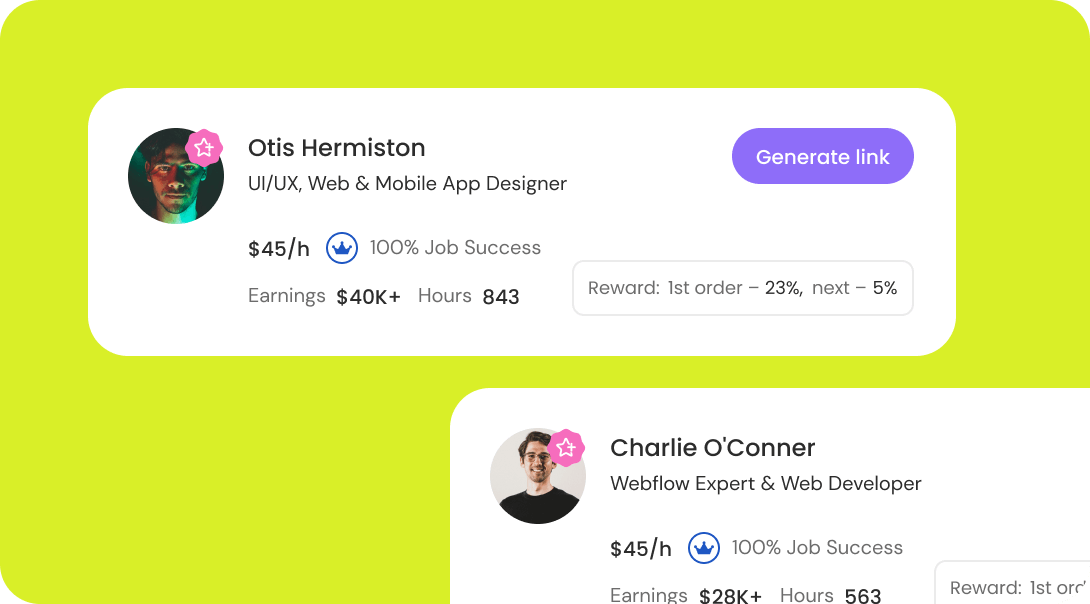
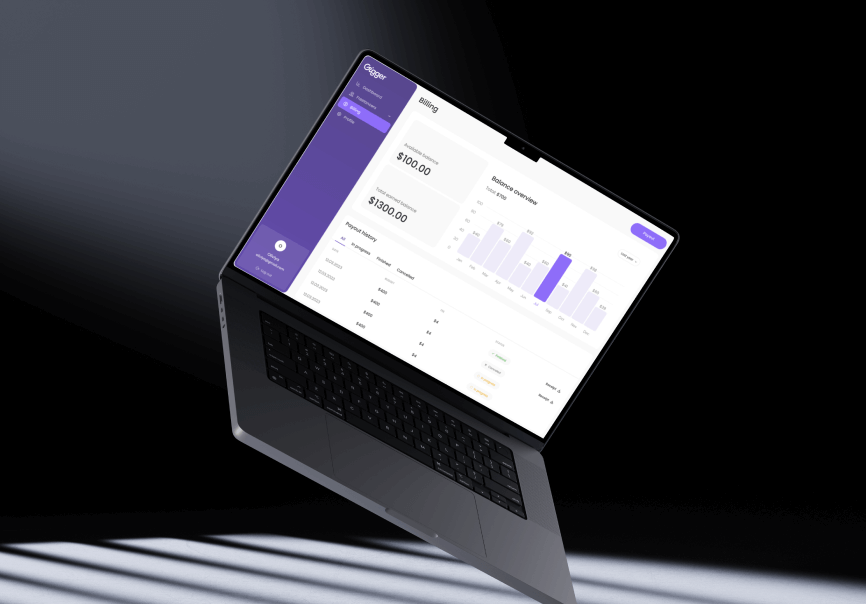
That changes with Gigger.
For the first time, freelancers and agencies on Upwork can run affiliate programs with the same professionalism as SaaS and e-commerce brands.
👉 Affiliate marketing is proven to scale online sales. Now, it’s here for freelancers.
Join Gigger and start looking for affiliates today.